Thursday, June 14, 2012

Acupuncture for the Common Cold

Acupuncture has been found to be an effective treatment for the common cold, and is an excellent ally to give our immune system a boost during a time when our defenses need strengthening.  Typically, Acupuncture can help alleviate the intensity of symptoms, and often shortens the duration of the cold.  The treatment will vary depending on your specific symptoms, and your Acupuncturist will probably asks things about whether you have sore throat, fever, chills, cough, phlegm, headache, body aches, fatigue, and more.  The information you provide, along with your pulse and tongue, will help the Acupuncturist arrive at a diagnosis and treatment plan to help boost your body's defenses and get you feeling better as soon as possible. 

Some people are under the impression that they shouldn't come in for a treatment if they have a cold.  We ultimately leave that decision up to you, and we certainly encourage you to stay home in bed, resting, if that feels like the best place for you to be.  A high fever, a persistent, uncontrollable cough, or vomiting, would all be good reasons to stay home and rest.  However, if you feel well enough to come to the clinic, there are a lot of things we can do to help point your body back in a healing direction.   

Often people are concerned about their symptoms disturbing other patients in the community setting.  While this is a valid concern, we would like you to be able to come get treatment if possible, and sometimes coughing or sneezing dissipates during a treatment.  We take measures to keep other patients germ free, such as switching out the blanket that covers your chair after your done, with a clean blanket.  We also have hand sanitizer and tissues in the room, and of course as always, all the needles are packaged in sterile containers and are disposed of after a single use.  If you are unsure of the best choice in your particular situation, you can always call us to explain your symptoms and get our opinion about the best plan for you.

Acupuncture encourages your body to shift back into a healthy balance, so, in applicable cases, the treatments would be aimed at clearing heat (fever, sore throat, inflammation), soothing the lungs to alleviate cough, alleviating head and body aches, soothing an upset stomach, and strengthening your immune system to fight off whatever pathogen is causing the symptoms.  Beyond the Acupuncture treatment, we have various herbal lozenges and syrups to soothe sore throats, as well as several herbal formulas and herbal teas to help support your process of recovery and healing.


Thursday, April 19, 2012

Acupuncture for Emotional Well Being

Many people get Acupuncture treatment for physical health concerns, but Acupuncture is also very effective at relieving stress, calming the mind, and balancing mood and emotional fluctuations. Our emotional and mental health has a huge impact on our well being, and can transform our experience of day to day life. Our emotions and mood are always changing over the course of our life, or even over the course of a day. This is a completely normal and healthy part of life. However, when we get "stuck" in a certain emotional pattern, whether it be sadness, depression, anxiety, fear, anger or irritability, sometimes we need a little support to help us shift back into balance.

Acupuncture is all about treating every individual holistically- mind, body, and spirit. The Acupuncturist looks for any areas of deficiency, excess, or stagnation, in order to select treatment points that will re-balance that individual and promote the smooth flow of energy, harmonizing body, mind, and spirit. Our emotions often affect us on a physical level as well, whether they take a toll on our sleep, our energy level, or our digestion, and so each individual's unique presentation of s is treated with a unique set of points selected by the Acupuncturist to treat their specific condition.

Acupuncture has been found to stimulate release of the body's own endogenous endorphins which help relieve pain, and Acupuncture also regulates serotonin levels in the brain. Serotonin has been called "nature's feel good chemical" because of it's effect on mood and disposition. Many anti-depressant prescriptions help by affecting serotonin levels, because it can help promote a feeling of calm and an uplifted mood. Acupuncture is a way to achieve this effect without the side effects of prescription medications. Additionally, Acupuncture relieves stress by encouraging the central nervous system to shift out of sympathetic "fight or flight" mode, into parasympathetic "rest and relax" mode. Most people feel very relaxed during and after treatment.

If you are seeking balance for your emotions, Acupuncture is an effective therapy that addresses the whole person, to bring balance and well being to body, mind, and spirit.

Wednesday, February 8, 2012

Smoking Cessation

Are you interested in quitting smoking, but it seems daunting? Here is The Pin Cushion's smoking cessation protocol. Remember, quitting smoking is the best thing you can do for your health!

Acupuncture is an effective tool to enable one to quit smoking by minimizing cravings, calming the nervous system and strengthening will power. However, acupuncture can only work if you are ready to quit and willing to commit to the process.

Acupuncture works by intercepting messages sent by the brain to the body that demand more nicotine, thereby disrupting the addictive process. Treatment will help eliminate most cravings, but not the habit. Generally treatment can help reduce cravings from 20+ cigarettes to only 3-5 a day.

Some behavior modification in the weeks before quitting helps to set the right course.

THE PLAN:

Today is the start date, and you will quit smoking 10 days from now. In the next 10 days you may smoke as often and as much as you want BUT, you may not do anything else while smoking. No driving, no tv, no email, no phone, no conversation. Your attention must be 100% toward the act of smoking. Smoke the strongest cigarettes you can handle for the first 5 days at your regular rate, and then move to ultralights for next 5 days while reducing your intake to half what it normally would be. All the while keeping your attention fixed exclusively on the act of smoking. Come in for acupuncture at least once during this time period.

Once the 10 days are up- that's it, you're done. Come in for acupuncture treatment 2-3 times the first and second week of quitting, followed by one acupuncture treatment in the third and fourth week of quitting.

Support person - The decision to stop smoking can elicit uncomfortable emotions. Ask someone who is available to you in the next few weeks to act as a sounding board and provide encouragement when needed.

Affirmation - An affirmation is a positive statement repeated often to create desired changes in your life. Repeating the affirmation helps not only to remind you why you are no longer smoking but imprints a new image of health so that the body can then produce health. Examples: "I am a non-smoker. I breathe fresh, clean air deeply into my lungs. I make healthy choices in my life."

Drink water - Research shows that dryness causes cravings. Drink water at room temperature frequently throughout the day.

Refrain from drinking coffee - Research shows that coffee causes cravings and dehydrates the body.

Food choices - Eat a lot of carrots, celery, and other vegetables throughout the next few days. Candies upset blood sugar level, which can aggravate smoking withdrawal symptoms. Sugar subsitutes such as Nutrasweet are sweeter than sugar and cause further cravings.

Managing cravings - Cravings feel like they will last forever but actually fade in two minutes. Plan what you will do during a craving. Examples: Repeat your affirmation, breathe deeply, walk to another place, use visualization, call your support person.

Thursday, October 20, 2011

Fall Applesauce

According to Chinese Medicine, apples are very nourishing for the lung and metal element, which are both associated with sadness and lethargy. Got a stubborn cough? Feeling down about the shortening days? Just need a warm, comforting bowl of sweetness? Try applesauce! So much better than the canned stuff, fresh applesauce is simple, affordable, and incredibly healthful.
I love tart cooking apples for this, including Granny Smiths, Gravensteins, Gala, Fuji, and Honeycrisp, but any apple will do.

Apples, cored and chopped (peeled for smooth sauce)
Water
cinnamon (optional)

Add your chopped apples to a splash of water in a large saucepan and simmer, covered, over medium heat. Check on the apples every 10 minutes or so, adding more water to prevent burning, if necessary. Once the apples are tender, mash them with a potato masher or blend for extra-smooth sauce. Add a dash of cinnamon and you're good to go!

Tuesday, October 11, 2011

Acupuncture for Migraines

What do Vincent Van Gogh, Lewis Carroll, Claude Monet, Julius Caesar, Virginia Wolfe, Napolean, Elvis Presley, and President John F. Kennedy have in common? They are amongst the countless individuals that have played out their unique life story while dealing with the challenge of migraines.

The Mayo Clinic summarizes the definition of a migraine as such:

"A migraine headache can cause intense throbbing or pulsing in one area of the head and is commonly accompanied by nausea, vomiting, and extreme sensitivity to light and sound. migraine attacks can cause significant pain for hours to days and be so severe that all you can think about is finding a dark, quiet place to lie down. some migraines are preceded or accompanied by sensory warning symptoms (aura) such as flashes of light, blind spots or tingling in your arm or leg."

As unappealing as the above set of symptoms sounds, anyone who has experienced a migraine knows that a simple string of sentences does nothing to convey the intensity of debilitating effects migraines can have on daily life.

Migraines can also affect speech, and make it difficult to form sentences. Migraines typically last from four hours to three days, and sometimes even longer. The various visual phenomena, or, aura, that precede a migraine (usually by about 10-30 minutes before the headache) are experienced by approximately 20 percent of migraine sufferers.

The U.S. Department of Health and Human Services and the National Headache foundation report that approximately 30 million Americans suffer from migraines. 30 million! And a whopping 75% of those are women. So where do they come from, and why do some people suffer from them, when others have never experienced a migraine in their life?

A migraine is uniquely different than most other types of headaches, in that it is caused by vasodilation of cranial blood vessels, as opposed to vasoconstriction being the culprit in most other types of headaches- such as tension headaches. Genetics plays an influential role as well- 90% of migraine sufferers come from a family with a history of them. While the exact reason hasn't been fully explained yet, it is clear that migraine sufferers brain's are more easily excited than non-sufferers- the neurons are triggered to fire more easily.

Fluctuations in female hormones seem to increase the brain’s hyper-excitability even more. 75% of migraine sufferers are women, and migraines are often triggered before or during menstrual periods when estrogen levels drop. Additionally, most women report a decrease in frequency and severity of migraines after menopause.

Treatment options:

Most treatment options for migraine sufferers offer little to no relief, not to mention short lived results. More and more research is backing up the therapeutic effects of "alternative" medicine- natural, holistic health and wellness options that work to address the underlying cause of migraines, and prevent future attacks, as opposed to just trying to find a quick fix to cover a symptom for temporary relief.

The first step toward finding a solution for your unique set of symptoms, is finding what triggers send your brain into that hyper-excited state. There are uncontrollable triggers, such as weather fluctuations, and varying hormones during the menstrual cycle. Then there are controllable triggers, such as odors, lights, smoke, and diet.

Stress management is the number one goal for prevention, and making sure sleep is regular, restful, and the right amount for you, is a huge component to pain relief. Eating regularly and drinking enough water are also important components in migraine prevention. Along with eating regular, balanced meals of healthy, nutritive food, it's important to be conscious of dietary triggers. Some common dietary triggers include alcohol, dairy, chocolate, caffeine, gluten, aspartame, monosodium glutamate, salty foods, processed foods, and foods with nitrates. A food diary can be invaluable to help you identify triggers.

Naturopathic Doctors and Medical Doctors are recommending Acupuncture as a way to help prevent migraines, because they see the results. Because Acupuncture is a holistic medicine, it is addressing each patient on an individual basis, creating a unique treatment to address the symptoms they are experiencing. Acupuncture is beneficial for stress relief, and also therapeutic for improving quality of sleep, and those two reasons alone are enough to give it a try. Additionally, research has shown that Acupuncture points shift the body back into a parasympathetic mode, the central nervous system's "rest and relax" mode, a state conducive to healing, stress relief, and pain relief. Acupuncture is famous for pain relief, because it triggers the release of endogenous endorphins, our body's own natural painkillers.

Since migraines are such a complex condition, with varying triggers and symptoms, the treatment also needs to be unique and individualized, in order to get effective, lasting results. While there is no simple fix or easy cure, the process of studying your migraine patterns empowers you with knowledge that can be used to properly address your symptoms and find a level of relief that allows you to live a more manageable daily life.

Click here to read an article that explains the benefits of Acupuncture as compared to standard medical care for migraines.

Click here to learn why Acupuncture is a more effective and affordable option than Botox for migraines.

Thursday, July 28, 2011

Resolving Insomnia

Sleep has such a powerful effect on our daily life- it is imperative for our cognitive functioning, essential for our healing process, and critical for our emotional well being. When we sleep well, we are energized and grateful, but when sleep is elusive, a struggle to obtain, or disrupted for various reasons, we begin to recognize how vital it is to our wellness, and how difficult insomnia is to cope with.

Acupuncture is gaining recognition as an effective alternative to prescription sleep medications. Insomnia is a complaint commonly seen by Acupuncturists, as it effects and is intertwined with so many other conditions. We all want a natural, restful, restorative night's sleep, without the groggy hangover from pharmaceuticals or over the counter drugs. Acupuncture provides relief on a deeper level, treating the cause of the insomnia at the source, and dealing with each person's unique presentation of symptoms.


Insomnia is not a black and white issue, it's a term that encompasses various problems including: difficulty to fall asleep, restless sleep, waking during the night, waking up early in the morning, and dream disturbed sleep.

In Chinese Medicine, treating insomnia usually involves nourishing the Heart, and helping to calm the Shen, (the spirit of the Heart) so that it can rest, and be rejuvenated. However, each individual has their own unique presentation, which may also involve imbalance with other organs or meridians, and this is all taken into account when planning an appropriate treatment to alleviate the root cause of the insomnia. Following is an explanation of some types of insomnia identified by Chinese Medicine, and the typical patterns of symptoms that they involve.

Heart and Spleen Deficiency: involves difficulty falling asleep, fatigue, poor memory, palpitations, poor appetite, anxiety, and pale complexion.

Heart and Kidney Disharmony: characterized by waking frequently in the night, difficulty getting back to sleep, night sweats, palpitations, dizziness, poor memory, tinnitus, backache, dry mouth and throat.

Heart and Gallbladder Qi Deficiency: often affects timid individuals and involves waking up with fright and difficulty falling asleep again, lots of dreams, light sleep, palpitations, breathlessness and fatigue.

Liver Fire: more common in people with a lot of emotional stress, and can be characterized by nightmares, irritability, thirst, headaches, red eyes, and bitter taste in the mouth.

Phlegm Fire Disturbing the Mind: identified in people with restless sleep and lots of tossing and turning. There may also be dizziness, a feeling of oppression in the chest, nausea and poor appetite. Dietary changes can be very beneficial for this type of insomnia.

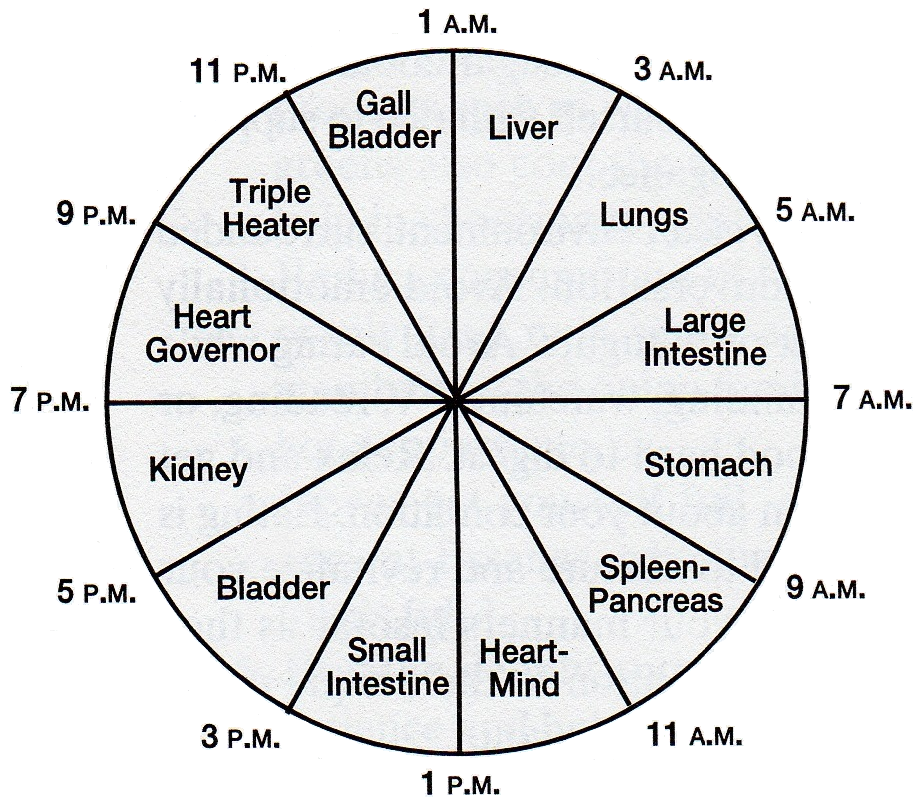
If you have noticed a pattern of waking up at the same time each night, it may be helpful for you to know that in Chinese Medicine, each of the 12 organ/meridian systems has an associated two hour time period during the 24 hour day. If you consistently wake during a certain time period, it could be helpful for your Acupuncturist to know, to better understand potential causes for your insomnia. This information, along with your symptoms, feeling the pulse, and observing the tongue, helps to determine a therapeutic treatment plan.

More and more people are seeking out Acupuncture for insomnia. Whether you've tried medications and don't like the side effects, are worried about dependence, or just don't feel like you are getting quality sleep when it is induced by a medication, Acupuncture is a therapeutic alternative that nourishes the body, mind, and spirit on a core level. Many people find that Acupuncture helps them feel calm and relaxed, which naturally allows them to fall asleep peacefully and wake feeling refreshed.

Sleep induced by a prescription is better than no sleep at all, but many people are left feeling groggy and hungover, and not as refreshed as they would feel from natural sleep. By treating your insomnia at the source, Acupuncture encourages your body's own natural sleep cycle to take over, and re-establish a peaceful rhythm of restorative sleep once again, so that you can greet each new day feeling rejuvenated and refreshed.

Thursday, July 14, 2011

Self Care for Allergies and Sinusitis

In the recent months our clinic has seen a spike in the number of patients suffering from seasonal allergies. Symptoms include sneezing, itchy eyes and nose, excessive mucus, sinus congestion, headache, fatigue and wheezing or coughing. The unlucky few may develop a sinus infection. Why are so many people suffering from allergies and what can be done about it? My hope is that this article will provide you with valuable information to help you reduce your suffering!

First let’s define allergy. Allergies are defined as: “a hypersensitivity disorder of the immune system. Allergic reactions occur to normally harmless environmental substances known as allergens; these reactions are acquired, predictable and rapid. Conventional medicine treats allergies with medication and injections. Chinese medicine has a different approach. The goal is to reduce the reactivity of the body by lowering physical and emotional irritation and regulating and strengthening digestion and the immune system. Ideally, acupuncture treatments will begin before the seasonal allergies start. This can be difficult since the seasons of the Northwest vary greatly from year to year. In addition to receiving regular acupuncture to reduce irritation and balance digestion/immunity, the following techniques and guidelines are recommended:

  1. Environmental Health
  2. Dietary Therapy
  3. Herbal Supplements

Environmental Health The EPA says that 60 % of Americans live in areas where breathing is a risk to one’s health. Air and environmental pollution are significant contributors to the rise of allergies. Remember that all of our energy comes from the air we breathe and the food we eat! Therefore the quality of air and food are extremely important. The nose and sinuses serve as the body’s primary air filter and protector of the lungs. Particulates of dust/ sand/soot /smoke, as well as bacteria/viruses/mold/chemicals clog and irritate the mucus lining in our nose and sinuses. Severe and persistent swelling blocks our sinuses leading to chronic congestion and infection. The following steps will help prevent and reverse this outcome.

  1. Breathe clean air. Make sure you replace your furnace filter every 3 months. Use a humidifier if you have electric heat in your home. Fill your home with plants. Spider plants, aloe vera, philodendron and chrysanthemums all function as very effective air filters.
  2. Irrigate. Use a neti pot to clean your sinuses. For people with chronic sinusitis this procedure should be done at least once a day, preferably in the evenings or after a steam.
  3. Nurture your respiratory system by breathing steam. Put a large pot of boiling water on the stove and add a couple drops of Eucalyptus Oil, then cover your head with a towel and breathe in. Or visit one the local day spas (Olympus, Hot House, Banya 5) and melt in their Eucalyptus stream saunas!
  4. Shower at the end of the day during allergy season. That way you are washing out accumulated allergens that may be trapped in your hair before going to bed.
  5. Exercise regularly. If you are exhausted from your allergies, start slowly with two 30-minute aerobic workouts per week. This might just be walking the treadmill. Build up slowly to 3-5 workouts per week. If you have a sinus infection, no aerobic exercise, only moderate walking.
  6. Increase your water intake!

Dietary Therapy During allergy season it is important to avoid foods that slow and impair digestion. Strong digestion helps us to have adequate and steady energy, blood production, and smooth circulation. When digestive function is impaired the balance of absorption/elimination is altered and toxins accumulate, creating a hyper-reactive body. Slowed digestion also leads to accumulation of phlegm which contributes to congestion and fatigue.

Dietary recommendations: Foods that are warming and neutral in nature. Foods that are cold extinguish “digestive fire” and contribute to mucus build up. Sorry, no smoothies and ice cream!

Consume more pungent vegetables and spices: onion, leek, ginger, cinnamon, fennel, garlic, and nutmeg.

Avoid: In general avoid excessive raw vegetables (remember, warm instead of cold—steam them), fruits (mainly citrus). No alcohol or dairy. Milk can increase and thicken mucus and is often the cause of food allergy. Sugar (including alcohol) weakens the immune system and is the primary fuel for bacterial infections and candida.

For those of you that want to be more aggressive, I recommend a product called MediClear by Thorne. Mediclear is a supplement containing proteins, vitamins, minerals and specialized nutrients and botanicals. It is intended to be taken daily as part of a 3 week cleansing program to cleanse, detoxify and strengthen the body. The 3 week program also requires eliminating certain foods, alcohol, and caffeine. If you are interested we can order the supplement at the clinic and a booklet outlining the food guidelines and menus is included. This is an easy, safe, affordable and effective way to “reset” your body.

Herbs/Vitamins

We carry a variety of Chinese herbs at the clinic. Consult with your acupuncturist for the appropriate formula. The following vitamins/minerals are recommended daily:

  • Multivitamin
  • 1000-2000 mg of Vitamin C
  • 100 mg Selenium
  • 500 mg Magnesium Citrate
  • 100 mg Vitamin B6

The following doses are taken from Robert S. Ivker's book, Sinus Survival: The Holistic Medical Treatment for Sinusitis, Allergies, and Colds. You might want to read this book too!

I really hope this helps—see you on the other side!